
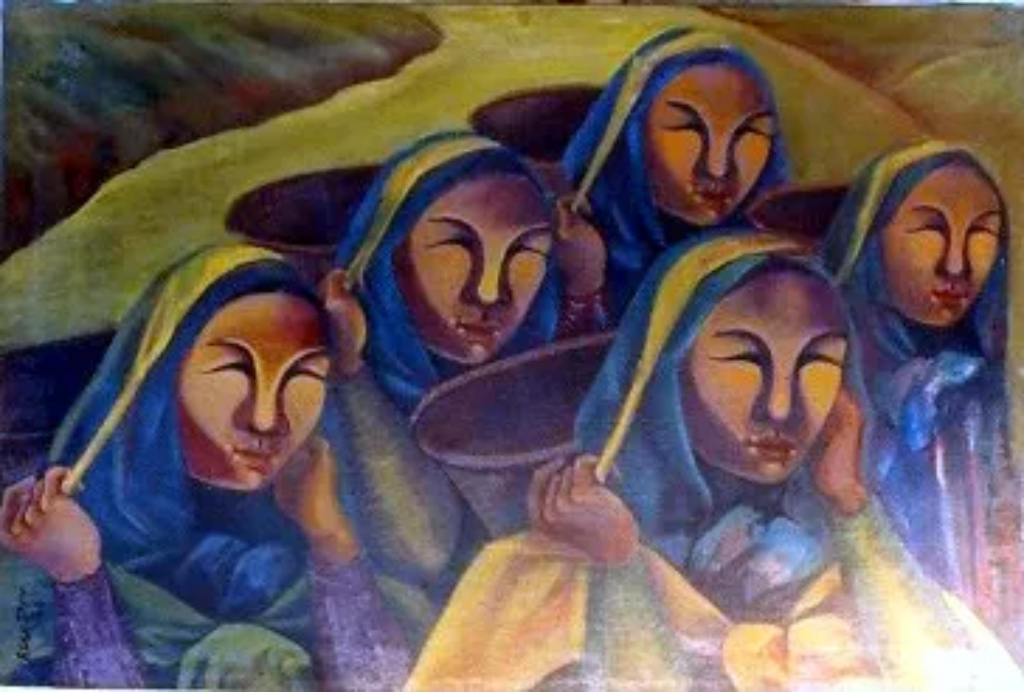
Portrayal of Womanhood in Asu Deb’s paintings
Ashutosh Deb, popularly known an Asu Deb was a pioneering self-taught artist who hailed from Dhubri, Assam. Before becoming well-known as a painter, Asu Deb worked as a textile designer for a significant amount of his career serving in several cotton mills in places like Surat, Calcutta, Jessore, and Khulna (now in Bangladesh). Later on, he was employed by educational and training establishments like the Weavers Training Center, Janata College, and the Assam Textile Institute, Guwahati. This professional journey provided him with exposure to a variety of textile customs and craft techniques, which had a long-lasting effect on his visual language. His initial sketches, drawings and designs indicate his undying fascination for textile patterns and folk motifs that were popular at the time.
Prafulla Dutta Goswami, eminent folklorist of Assam states that Asu Deb’s paintings have a largely purposive character that reflects an intimate connection with the land and surroundings from which they originated. Goswami noted that the artist’s creations bear a clear regional influence, indicating that Deb’s visual language was greatly influenced by the local geography and culture and mainly its people. His compositions incorporated the rhythmic patterns of dots, lines, and decorative elements found in weaving, wickerwork, and rural crafts of the region that eventually came to define his paintings.
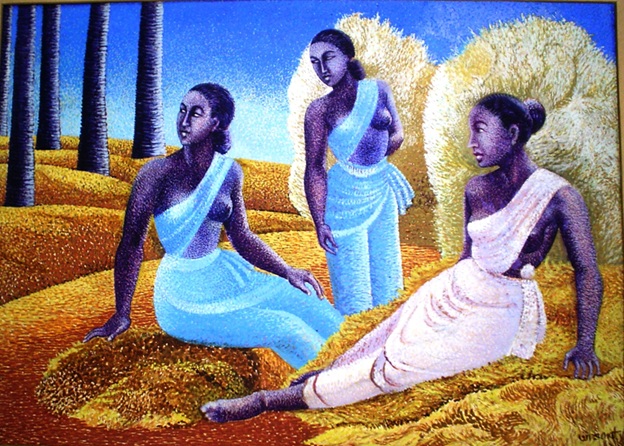
The subject matter of Deb’s work often included women from the Bodo, Kachari, Garo, Khasi, Naga, and Santhal communities within North East India; encouraging respect, support and acknowledgment for the valuable contributions made by all women through their perseverance that help maintain family, community, agriculture, and also sustain the nature. In his painting titled, ‘Santhal Virgins’, he paints three Santhal women posed beautifully within a serene rural setup showing the harvest season. The women have traditional clothing on, and because of their serene facial expressions and elegant poses, they appear completely harmonious with their environment. The use of dot-based textures adds a soft quality to both the women’s bodies with the traditional rural background creating an ethereal quality to the work. The woman’s harmonization with the rhythms of Earth is emphasized by the large expanse of harvested crops on the canvas. This arrangement evokes the connection between women and nature, where the abundance of the harvest represents fertility and sustenance, establishing her as a symbol of the generative qualities of Mother Earth.
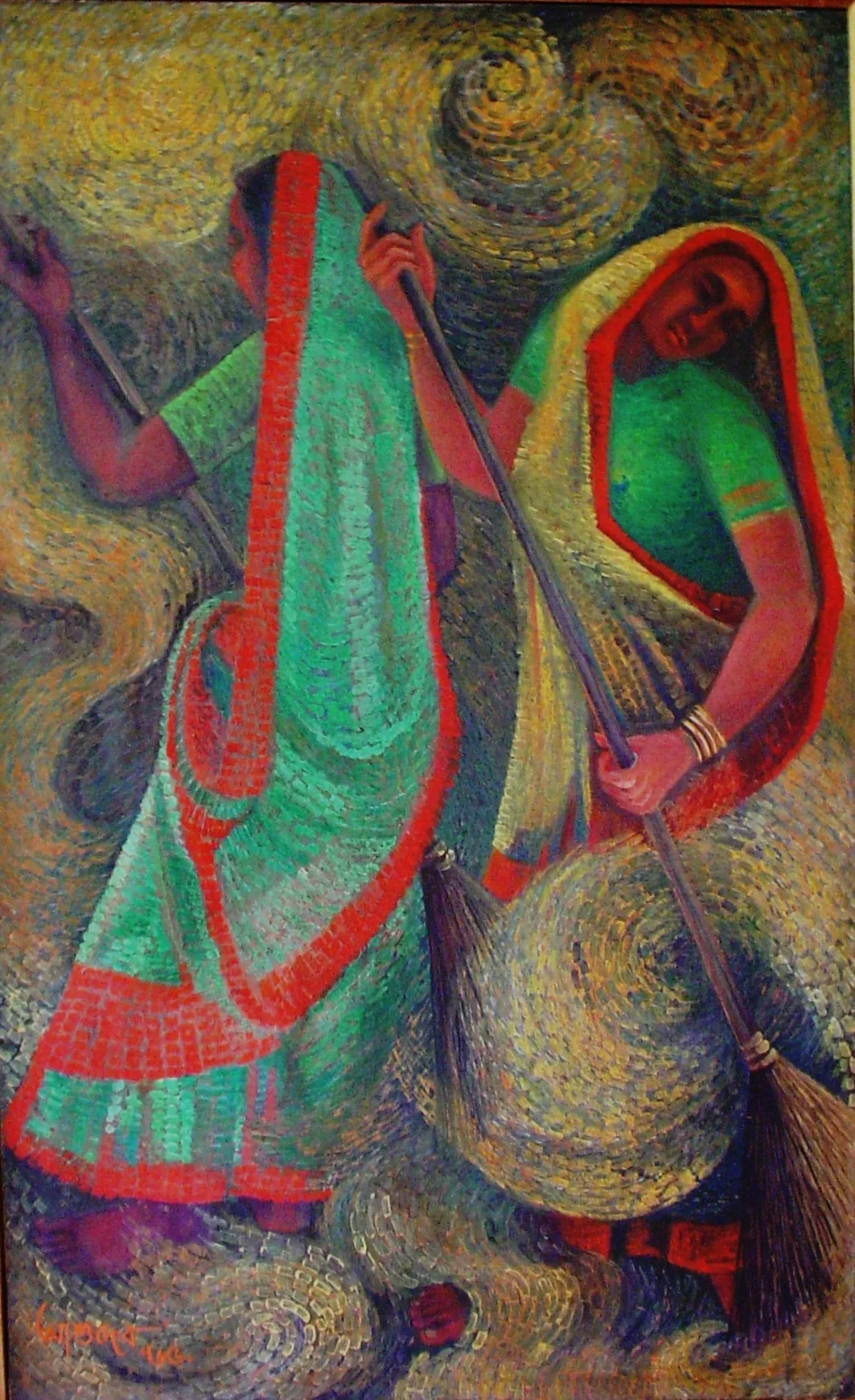
Another major painting by the eminent artists is titled as ‘The Harijan’, which portrays the lives of marginalized womenfolk, where two women from the Harijan community are shown fully dressed in their traditional ghagra, choli and odhni decently covering their heads, sweeping the dusty streets. The artists have diligently shown the two women engaged in the work which is associated with socially disadvantaged groups, but instead of relegating them as marginalized, they are positioned at the centre of the painting in vibrant green and red attire attracting attention of the viewer, showing their work and their dignity as working women of the society and bread-earners for their family. The waves of dust produced in the setting are created by dots and short lines in a circular fashion representing the clouds of dust created with the movement of their brooms. The action of the women within the background is complemented by the elements of the background creating a significant statement about the social situation as well as the existence of a great amount of labour that working women perform that often goes unnoticed.
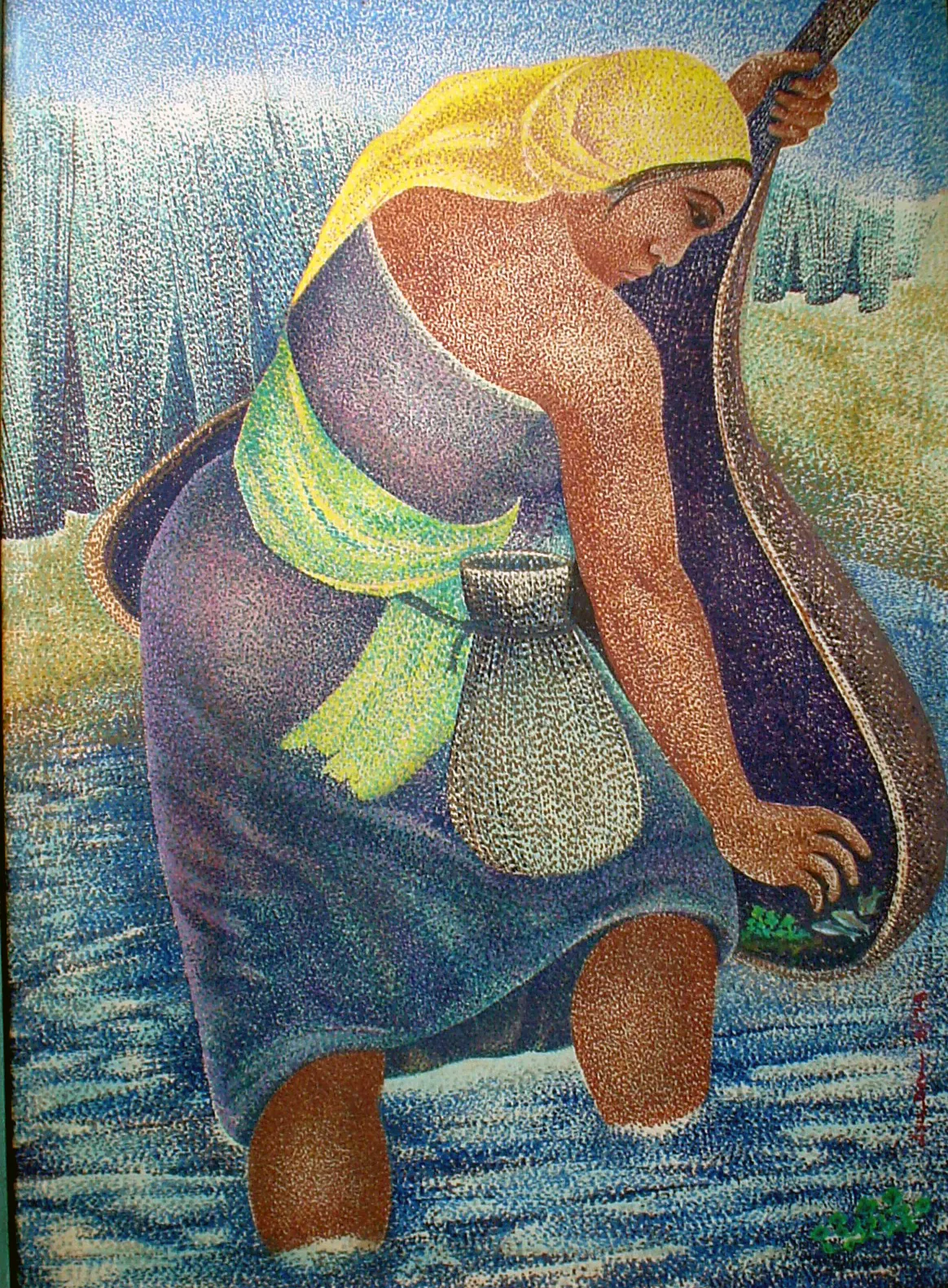
Asu Deb’s works are particularly known for his depiction of women from North-East India, belonging to different ethnic groups, as major subjects performing the everyday activities of their respective communities like fishing, harvesting, and tea plucking, weaving, etc. Although these activities might appear as regular or modest works, Deb represents the dignified nature of these daily acts, by demonstrating how the womenfolk create and maintain social relationships and keep the social structure of a community intact. In this way, Asu Deb’s representations of women acknowledge their often unnoticed but powerful influence on the cultural and social framework of society. He further depicts an interesting way of interpreting women in the way he handles the image of their bodies. He creates earthlike, rounded women figures that seem to naturally belong within the surrounding landscape, adhering to their ethnic roots. This visual unity between woman and earth illustrates the connection between woman, the earth’s life-giving and sustaining forces, and the continuum of life.
** Image courtesy: https://artofasudev.org