
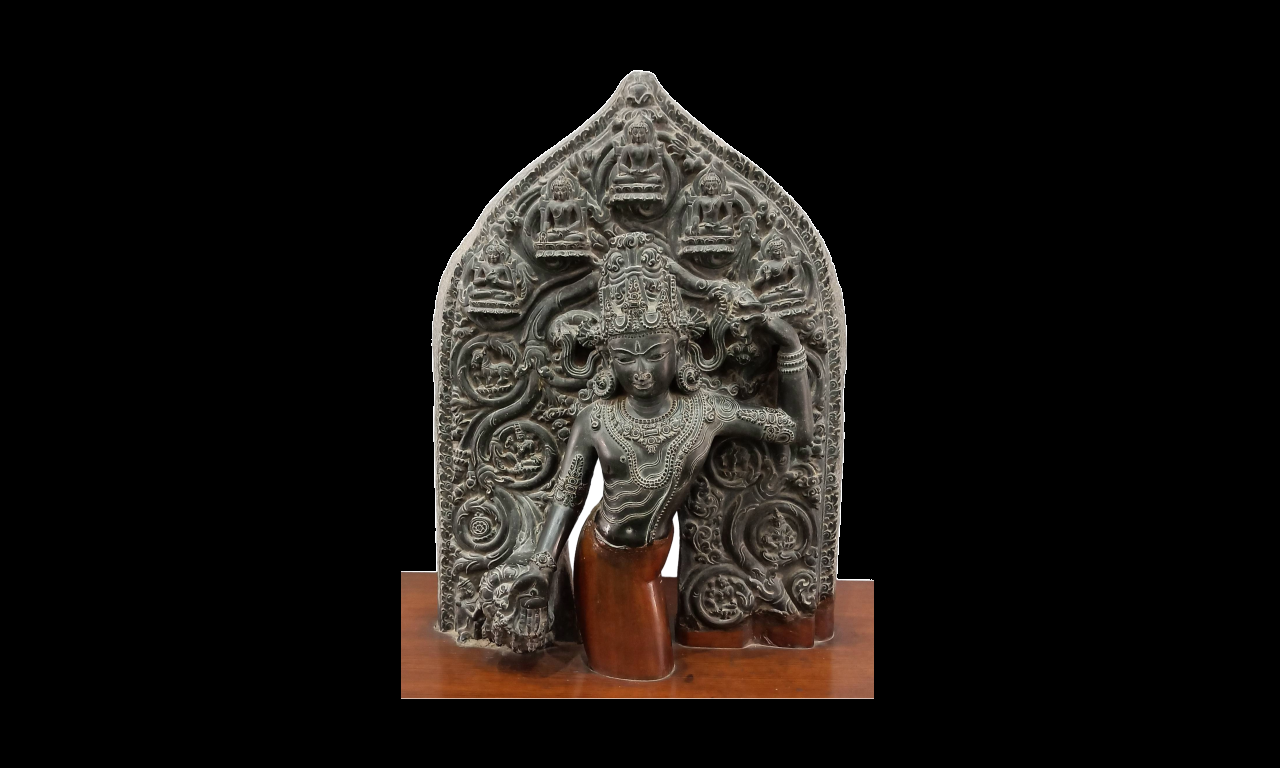
Padmapāṇi Avalokiteśvara | 11th–12th Century Pāla Buddhist Sculpture
The sculpture represents Avalokiteśvara (Padmapāṇi Lokanātha), the Bodhisattva of Infinite Compassion, and is an outstanding example of Pāla-period Buddhist sculpture dating to the 11th –12th century CE. Carved from polished black basalt, the image displays the technical finesse, elegant modelling and intricate ornamentation that distinguish the sculptural ateliers of eastern India during the mature phase of the Pāla dynasty. Although the lower portion of the image has been damaged, the surviving elements reveal a highly accomplished work that once served as an important object of devotion within a Buddhist religious context (Harle, 1994; Huntington, 1984).
Avalokiteśvara is portrayed in a graceful tribhaṅga posture, with the upper body gently inclined, creating a dynamic yet harmonious composition. The Bodhisattva’s right arm is elegantly raised above the shoulder, probably holding the stalk of a lotus (padma), while the left hand is lowered in Varada-mudrā, the gesture of charity and compassionate blessing. This combination of posture and gesture identifies the figure as Padmapāṇi Avalokiteśvara, whose lotus symbolises purity, spiritual awakening and the emergence of wisdom above the imperfections of worldly existence. Although portions of the attributes have been lost due to damage, the surviving iconographic features remain sufficiently well preserved for identification.
The Bodhisattva’s youthful face is characterised by elongated, almond-shaped eyes, gently arched eyebrows, a straight nose, and softly smiling lips, conveying profound serenity and compassion. The head is crowned with an elaborate kirīṭa-mukuṭa, richly decorated with floral and beaded motifs, while flowing locks of hair descend gracefully behind the ears. Although the central effigy of Amitābha Buddha, usually present within the crown of Avalokiteśvara, is now indistinct, the overall iconographic programme strongly supports the identification of the figure as the compassionate Bodhisattva. The torso is adorned with multiple necklaces, armlets, bracelets, and an elegantly draped scarf that follows the contours of the body, reflecting the idealised princely appearance traditionally associated with Bodhisattvas in Mahāyāna Buddhist art.
One of the sculpture’s most remarkable features is its richly ornamented prabhāvali (back-slab), densely carved with luxuriant vegetal scrolls, floral medallions and sacred motifs. The upper register contains five seated Dhyāni Buddhas, arranged symmetrically within niches. These represent the Pañca Tathāgatas, whose presence signifies the influence of Vajrayāna Buddhism during the later Pāla period and places Avalokiteśvara within a broader esoteric cosmological framework. The flowing scrollwork that envelops the composition symbolises the celestial paradise and reflects the extraordinary decorative vocabulary developed by Pāla sculptors.
The decorative medallions distributed across the back-slab contain miniature narrative and symbolic motifs, while the intricate floral ornament enhances both the sacred and aesthetic character of the composition. The sculptor successfully integrates architectural framing, celestial imagery and ornamental carving without distracting from the visual prominence of the principal figure. Despite the loss of the lower body, the surviving sculpture preserves its sense of elegance, movement and spiritual dignity.
Similar representations have been recovered from the great Buddhist centres of Nālandā, Vikramaśīla and Kurkihar, demonstrating the widespread dissemination of this artistic tradition throughout eastern India and beyond into Nepal and Tibet (Pal, 1986; Huntington, 1984).
Iconographically, the sculpture embodies Avalokiteśvara’s fundamental role as the universal saviour who responds to the suffering of all sentient beings. His princely adornment symbolises spiritual perfection attained without renouncing compassionate engagement with the world, while the lotus and the surrounding Dhyāni Buddhas emphasise his position within the Mahāyāna and Vajrayāna Buddhist cosmology. Even in its fragmentary state, the sculpture remains a compelling expression of medieval Buddhist devotion, illustrating the remarkable artistic achievements and theological sophistication of the Pāla artistic tradition.
References (Harvard Style)
Getty, A. (1914). The Gods of Northern Buddhism: Their History, Iconography and Progressive Evolution through the Northern Buddhist Countries. Oxford: Clarendon Press.

Harle, J.C. (1994). The Art and Architecture of the Indian Subcontinent. 2nd edn. New Haven, CT: Yale University Press.

Huntington, S.L. (1984). The Pāla-Sena Schools of Sculpture. Leiden: E.J. Brill.

Pal, P. (1986) Indian Sculpture: Volume II: Circa AD 700–1800. Los Angeles: Los Angeles County Museum of Art.

Rhie, M.M. and Thurman, R.A.F. (1996) Wisdom and Compassion: The Sacred Art of Tibet. New York: Harry N. Abrams.