
Compassion Embodied in Stone: An Iconographical Study of Avalokiteśvara in Early Medieval Buddhist Art
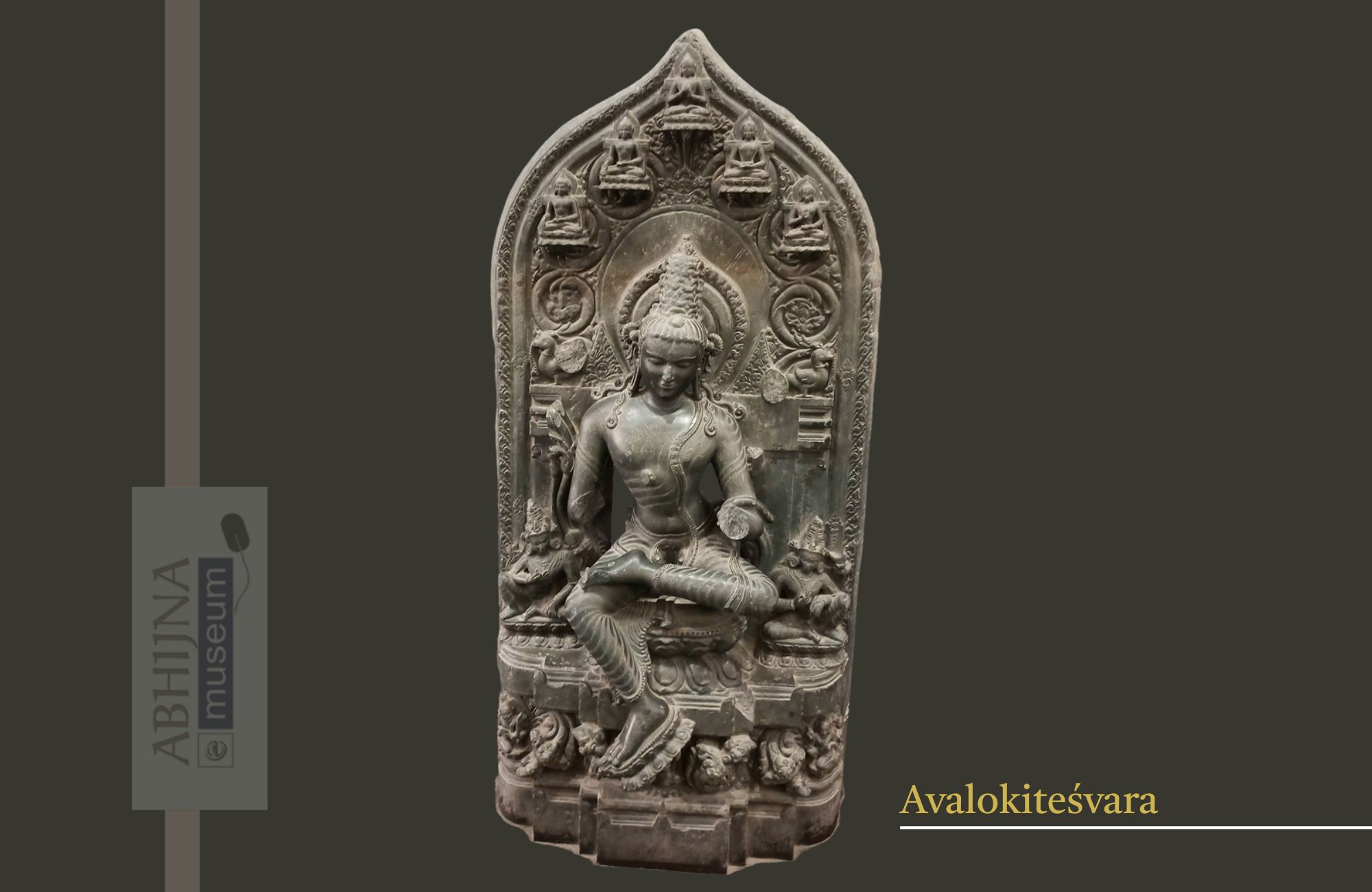
The sculpture represents Avalokiteśvara (Padmapāṇi Lokanātha), the Bodhisattva of Infinite Compassion and one of the most revered figures in Mahāyāna Buddhism. Carved in finely polished black basalt, the image exemplifies the sophisticated sculptural tradition of the Pāla School of eastern India (c. 10th – 12th century CE), a period renowned for its artistic refinement, elegant modelling and rich iconographic programmes. The sculpture reflects the mature phase of Buddhist art, when Bodhisattva imagery attained remarkable stylistic and theological complexity under the patronage of the Pāla rulers (Huntington, 1984; Harle, 1994).
Avalokiteśvara is depicted seated gracefully in lalitāsana (the posture of royal ease) upon a double-lotus pedestal, symbolising spiritual purity and enlightenment. The relaxed pose, with one leg pendant and the other folded upon the seat, signifies the Bodhisattva’s willingness to remain within the world of sentient beings while postponing final Buddhahood to assist others on the path to liberation. This posture is characteristic of compassionate Bodhisattva imagery in eastern Indian Buddhist art and reflects the ideal of active benevolence central to Mahāyāna doctrine (Pal, 1986).
The Bodhisattva is shown with two arms, the right hand extended in varada-mudrā, the gesture of charity and compassionate bestowal, while the left hand supports the stalk of a fully blossomed lotus (padma). The lotus, the principal attribute of Padmapāṇi Avalokiteśvara, symbolises spiritual purity, wisdom and the emergence of enlightenment from the imperfections of the worldly realm. Although minor damage has affected portions of the attribute, its iconographic significance remains evident.
The serene countenance displays the idealised features associated with Pāla sculpture: a gently bowed head, elongated, almond-shaped eyes cast downward in meditation, finely arched eyebrows, a straight nose, and delicately modelled lips that express tranquillity and compassion. The elaborate jaṭāmukuṭa (matted crown) encloses a small seated image of Amitābha Buddha, Avalokiteśvara’s spiritual preceptor and one of the defining iconographic features identifying the Bodhisattva. The presence of Amitābha signifies Avalokiteśvara’s role within the Buddhist pantheon as the principal emanation of the Buddha of Infinite Light (Getty, 1914).
The figure is adorned with necklaces, armlets (keyūra), bracelets, anklets, and a sacred scarf elegantly draped across the torso. Unlike representations of the historical Buddha, Bodhisattvas are portrayed as celestial princes, richly ornamented to symbolise their exalted spiritual status while remaining engaged with the phenomenal world. The transparent lower garment, rendered with delicate incised folds, demonstrates the sculptor’s technical mastery and the refined aesthetic characteristic of the Pāla ateliers.
The richly carved prabhāvali (back-slab) surrounding the figure is filled with symbolic and decorative motifs. Five miniature seated Buddhas occupy the upper register, representing the Five Dhyāni Buddhas (Pañca Tathāgatas), reflecting the growing influence of Vajrayāna Buddhism during the Pāla period. Celestial birds, floral scrolls and sacred emblems enrich the architectural frame, creating a visual representation of the celestial realm. Flanking the principal figure are diminutive attendant deities, probably Tārā and Bṛkuṭī, who frequently accompany Avalokiteśvara in Mahāyāna iconography, reinforcing the Bodhisattva’s salvific role.
The pedestal is further ornamented with scrollwork and mythical motifs that enhance the monumentality of the composition while maintaining perfect visual balance. The sculptor has achieved a harmonious integration of architectural framing, subsidiary figures, and decorative ornamentation without detracting from the central figure’s calm dignity. The highly polished surface, graceful anatomical modelling and symmetrical composition are characteristic features of 11th-century Pāla Buddhist sculpture, illustrating the remarkable artistic achievements of eastern India.
From an art historical perspective, the sculpture represents one of the finest expressions of Mahāyāna devotional imagery in medieval South Asia. The synthesis of idealised human beauty, intricate ornamentation and profound theological symbolism reflects the sophisticated iconographic conventions developed in the great Buddhist monastic universities of Nālandā, Vikramaśīla and Odantapurī, whose artistic influence extended across the Indian subcontinent and into Nepal, Tibet and Southeast Asia (Huntington, 1984). More than an object of worship, the image functioned as a visual embodiment of karuṇā (compassion), representing Avalokiteśvara’s eternal vow to alleviate suffering and guide all beings toward enlightenment.
Collection: Coochbehar Rajbari Palace Museum, West Bengal
References
- Getty, A. (1914) The Gods of Northern Buddhism: Their History, Iconography and Progressive Evolution through the Northern Buddhist Countries. Oxford: Clarendon Press.
- Harle, J.C. (1994) The Art and Architecture of the Indian Subcontinent. 2nd edn. New Haven, CT: Yale University Press.
- Huntington, S.L. (1984) The Pāla-Sena Schools of Sculpture. Leiden: E.J. Brill.
- Pal, P. (1986) Indian Sculpture: Volume II: Circa AD 700–1800. Los Angeles: Los Angeles County Museum of Art.
- Rhie, M.M. and Thurman, R.A.F. (1996) Wisdom and Compassion: The Sacred Art of Tibet. New York: Harry N. Abrams.