
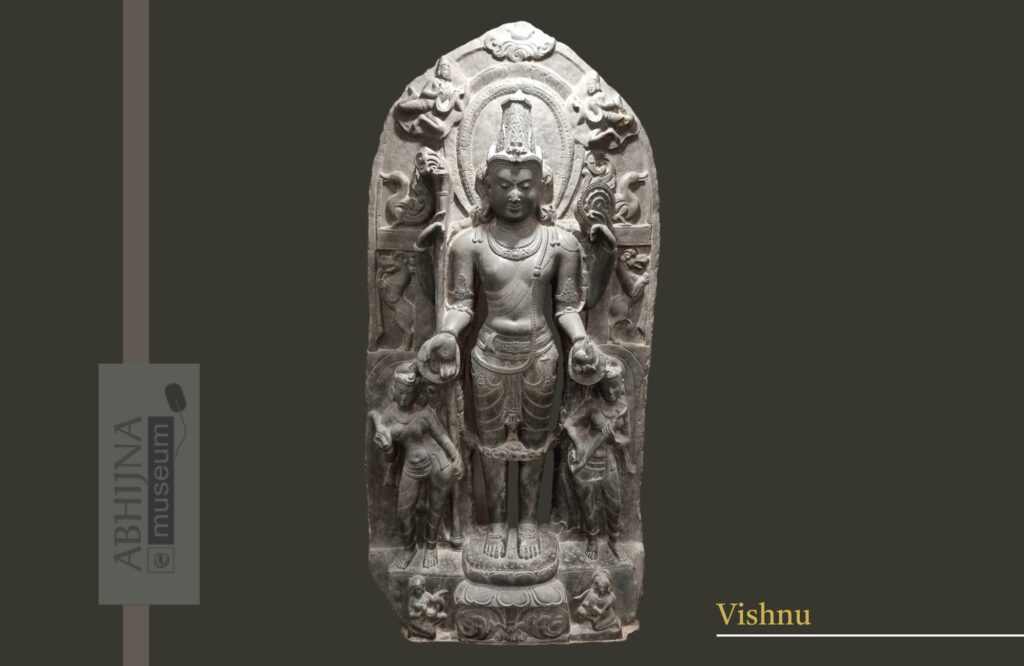
The sculpture depicts Lord Viṣṇu, the supreme preserver of the universe in Hindu theology, rendered in the refined sculptural tradition of 11th-century eastern India, most likely associated with the Pāla–Sena artistic school. Carved from finely polished black basalt, the image exemplifies the mature aesthetic and technical excellence of early medieval stone sculpture, characterised by harmonious proportions, meticulous ornamentation and a balanced iconographic composition. Such images were produced for installation in temple sanctums, where they functioned as principal objects of worship and visual embodiments of Vaiṣṇava devotion (Harle, 1994; Huntington, 1984).
Viṣṇu is represented standing in samabhanga, an erect and symmetrical posture that conveys divine stability, cosmic balance and transcendental serenity. The deity possesses four arms (Caturbhuja), signifying his omnipotence and his ability to sustain the universe. The upper right hand holds the gadā (Kaumodakī), the divine mace symbolising strength, authority and the power to uphold dharma. The upper left-hand carries the cakra (Sudarśana), represented as a finely carved discus, signifying cosmic order, the cyclical nature of time and the destruction of ignorance. The lower right hand displays the Varada-mudrā, the gesture of boon-giving and divine compassion, while the lower left hand holds the śaṅkha (Pañcajanya), the sacred conch whose primordial sound represents creation, purity and the triumph of righteousness. Together, these four attributes constitute the canonical iconography of Viṣṇu as prescribed in the Viṣṇudharmottara Purāṇa and other Śilpaśāstra texts (Rao, 1914–1916).
The deity wears an elaborately decorated kirīṭa-mukuṭa (high cylindrical crown), a symbol of supreme sovereignty, while his calm, oval face is marked by elongated almond-shaped eyes, delicately arched eyebrows and a gentle smile that reflects divine benevolence. A śrīvatsa mark is faintly visible on the chest, identifying Viṣṇu as the eternal protector of the cosmos. The figure is richly adorned with necklaces, armlets (keyūra), bracelets (kaṅkaṇa), anklets and a sacred thread (yajñopavīta) crossing the torso. The lower garment (dhotī), secured by an ornate girdle (mekhalā), is carved with finely incised folds that demonstrate the sculptor’s mastery in rendering textiles in stone.
The deity stands upon a fully blossomed lotus pedestal, symbolising spiritual purity and divine transcendence. The architectural back-slab (prabhāvali) is richly ornamented with decorative scrolls and an arched halo that emphasises the deity’s sacred status. At the upper corners appear celestial vidyādharas or flying attendants bearing garlands, indicating divine veneration, while graceful haṃsas (swans) occupy the middle register, symbolising purity and spiritual wisdom.
The sculpture is further enriched by subsidiary attendant figures positioned on either side of the principal deity. These female attendants are most likely Śrīdevī (Lakṣmī) and Bhūdevī, the celestial consorts of Viṣṇu, who represent prosperity and the earth, respectively. Their inclusion reinforces Viṣṇu’s role as the cosmic sustainer and protector of both the material and spiritual worlds. Additional dwarf devotees kneeling near the pedestal further express devotional reverence, creating a hierarchical composition centred on the principal deity.
From an art historical perspective, the sculpture exemplifies the mature characteristics of 11th-century Pāla–Sena Vaiṣṇava imagery. The highly polished stone surface, elegant anatomical modelling, restrained facial expression, and intricate ornamental treatment are hallmarks of eastern Indian sculpture during this period. Unlike the more dynamic sculptural traditions of central and western India, Pāla images emphasise composure, symmetry, and spiritual introspection, qualities fully realised in this representation of Viṣṇu (Harle, 1994; Huntington, 1984).
Iconographically, the image represents Viṣṇu not merely as a personal deity but as the cosmic preserver (Jagatpāla) whose divine attributes embody protection, righteousness and universal order. The combination of the conch, discus, mace and boon-bestowing gesture symbolises his role in preserving the balance of creation and safeguarding devotees against the forces of chaos. Consequently, the sculpture functioned simultaneously as an object of ritual worship, a theological statement and a masterful example of early medieval Indian stone carving, illustrating the flourishing of Vaiṣṇava iconography under the artistic patronage of eastern India during the eleventh century.
Collection: Coochbehar Rajbari Palace Museum, West Bengal
References:
- Harle, J.C. (1994) The Art and Architecture of the Indian Subcontinent. 2nd edn. New Haven, CT: Yale University Press.
- Huntington, S.L. (1984) The Pāla-Sena Schools of Sculpture. Leiden: E.J. Brill.
- Kramrisch, S. (1946) The Hindu Temple. 2 vols. Calcutta: University of Calcutta.
- Michell, G. (1988) The Hindu Temple: An Introduction to Its Meaning and Forms. Chicago: University of Chicago Press.
- Pal, P. (1986) Indian Sculpture. Vol. I. Los Angeles: Los Angeles County Museum of Art.
- Rao, T.A. Gopinatha (1914–1916) Elements of Hindu Iconography. 2 vols. Madras: Law Printing House.