
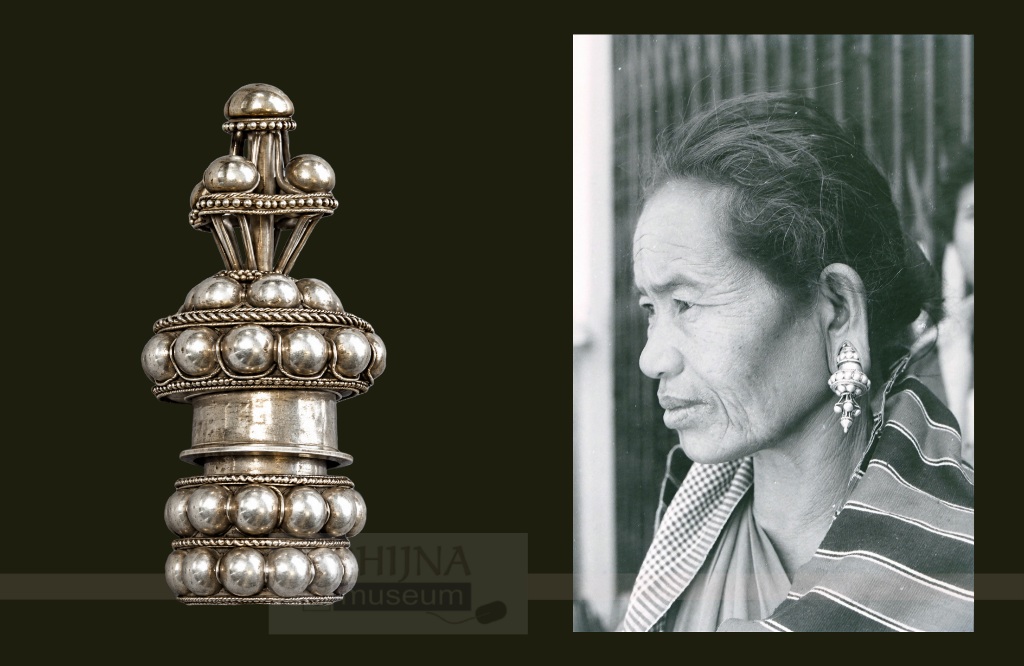
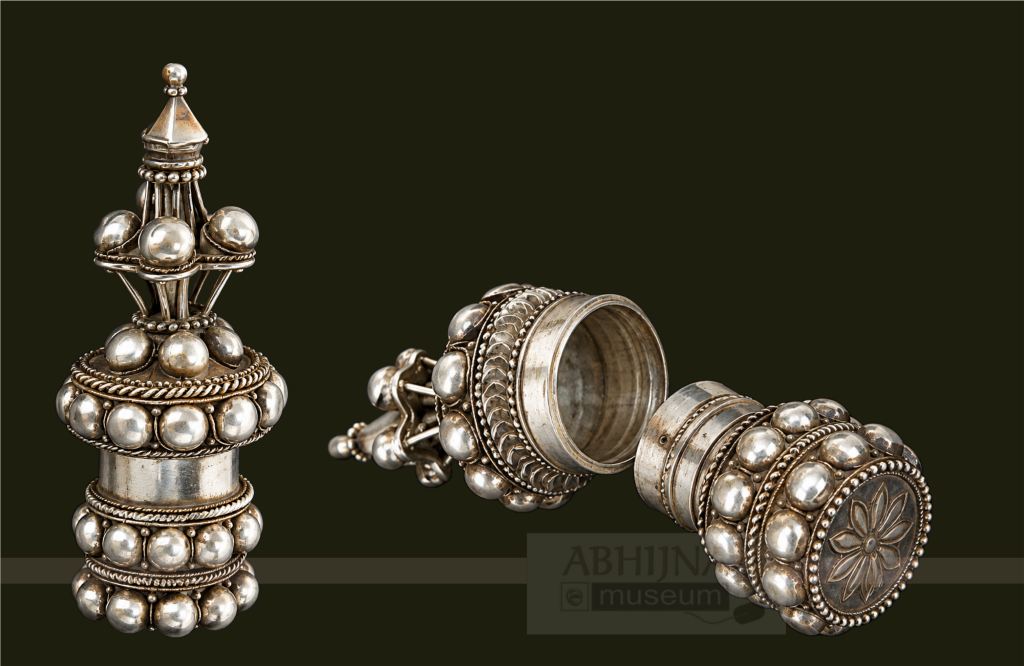
The Nothengpi is a distinctive silver ear ornament worn by women of the Karbi community of Assam, especially elderly women. It is a pair of hollow earrings, hammered from silver sheet and shaped like an openable cylindrical box. Its considerable size and unusual construction give the ornament a striking presence, and it stands as a fine example of traditional Karbi metalworking.
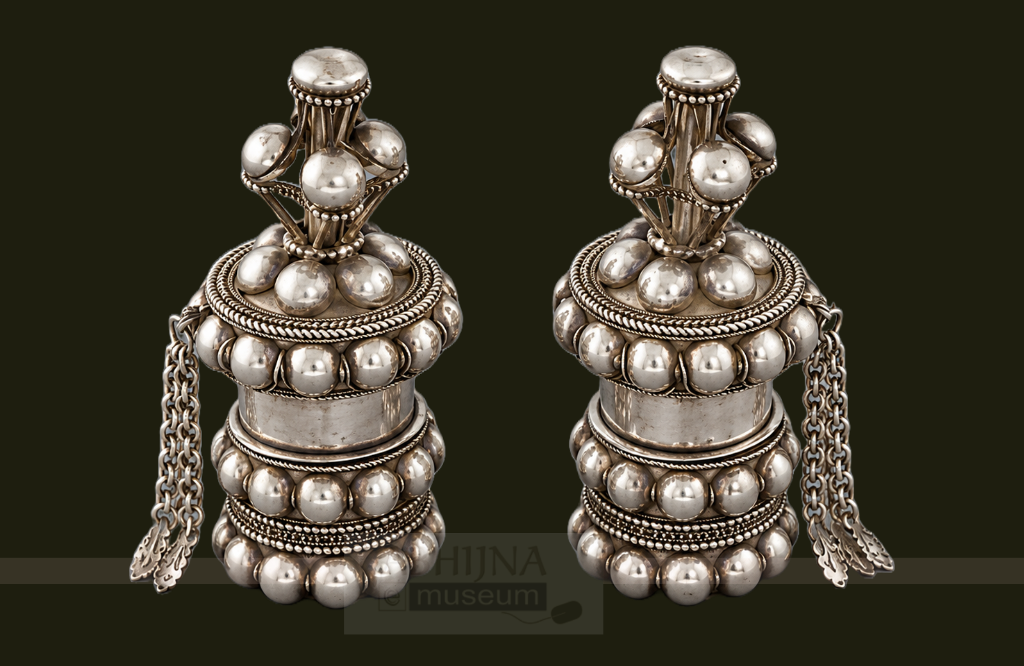
Category: Personal adornment; ear ornament
Material: Silver (hammered sheet)
Technique: Sheet-hammering; hollow, openable construction
The earrings are suspended from elongated, distended earlobes, a traditional bodily form known as Kadengchinro. The ornament is therefore inseparable from the practice of ear elongation, and the two together reflect an aesthetic ideal long cherished within the community. The hollow cylindrical structure makes the ornament lighter than its size would suggest, though its weight and dimensions remain substantial.
Nomenclature
The term Nothengpi is derived from no, meaning “ear”, and thengpi, meaning “tree” or “wood”. The name may thus describe an ear ornament that resembles a wooden or tree-like form, fitting its cylindrical shape.
Folklore and Symbolism
In Karbi tradition, the Nothengpi’s form is often associated with the nest of Bojaro, the king of birds. This association lends the ornament a symbolic dimension beyond its decorative function. Its significance lies not only in its materials and craftsmanship but also in the stories and beliefs passed down from one generation to the next.
Ritual Significance
The Nothengpi’s importance is most evident in the Chomangkan, the traditional mortuary festival of the Karbis. One observance is a rite known as Nodak Alangtuk, performed for women whose earlobes snapped under the weight of the heavy ornament. According to Karbi belief, such women are not permitted after death to drink water from the sacred Chom Arong. To remedy this, people dig a small well and make offerings and sacrifices so the departed souls may symbolically quench their thirst.
Significance
The Nothengpi is far more than an article of personal adornment. It brings together craftsmanship, bodily aesthetics, social identity, folklore, ritual, and beliefs concerning death and the afterlife. As a marker of identity, tradition, and collective cultural memory, it remains an important material expression of Karbi society’s living heritage.