
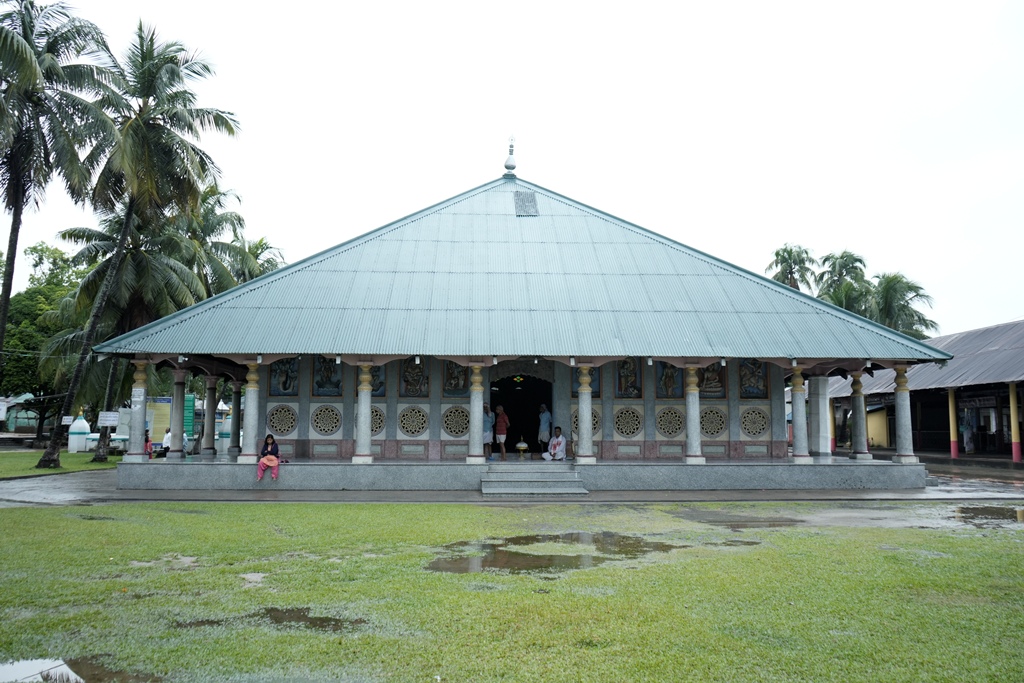
More than five centuries ago, Madhavdeva laid the foundation of what would become one of Assam’s most revered Vaishnavite institutions — the Barpeta Kirtan Ghar. A devoted disciple of Srimanta Sankardeva, Madhavdeva spent eight formative years here, composing many of his finest literary works and shaping the spiritual life of the region.
Before leaving to carry forward his guru’s mission, Madhavdeva entrusted the responsibility of the Satra to his disciple Mathura Das Burha Ata (1490–1596). Under Burha Ata’s stewardship, Barpeta Satra flourished. He became its first Satradhikar (head preceptor) and introduced a democratic system of administration that remarkably continues to guide the institution even today.
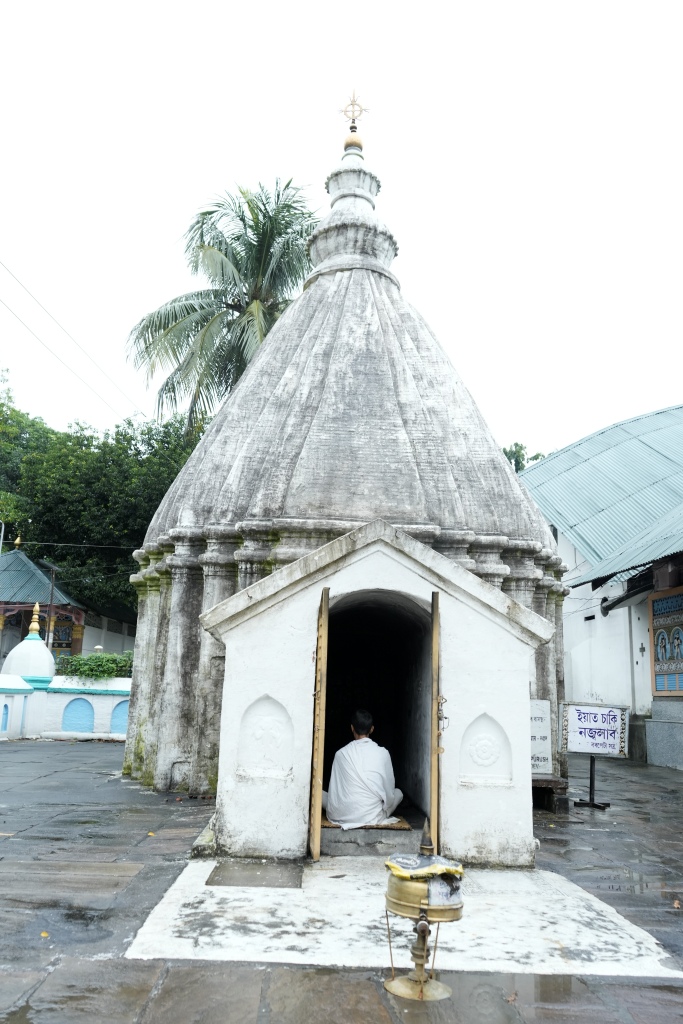
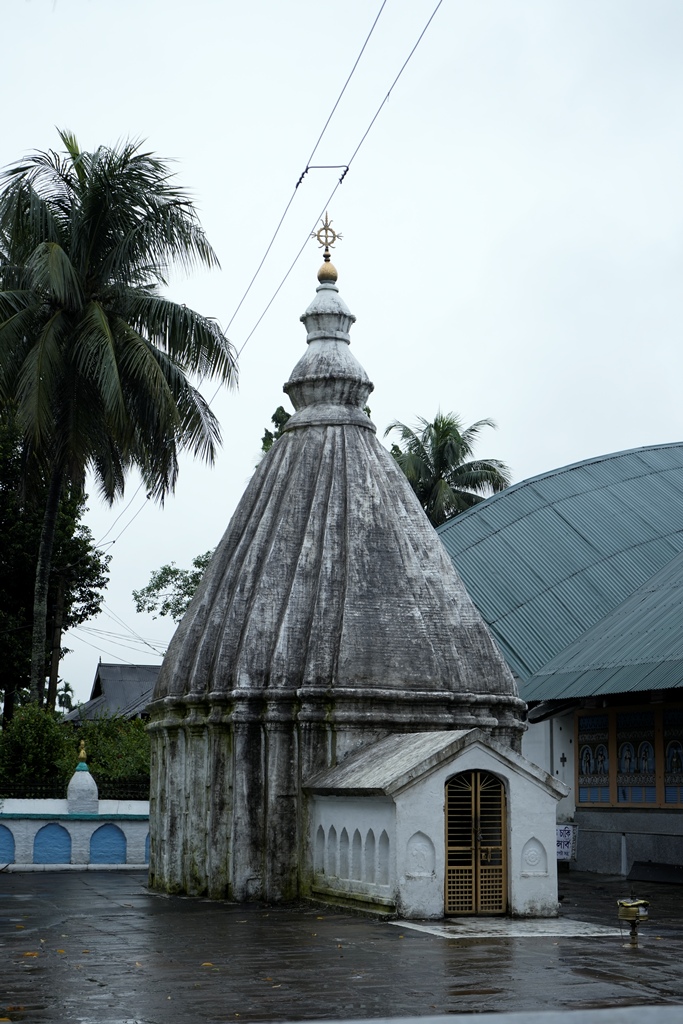
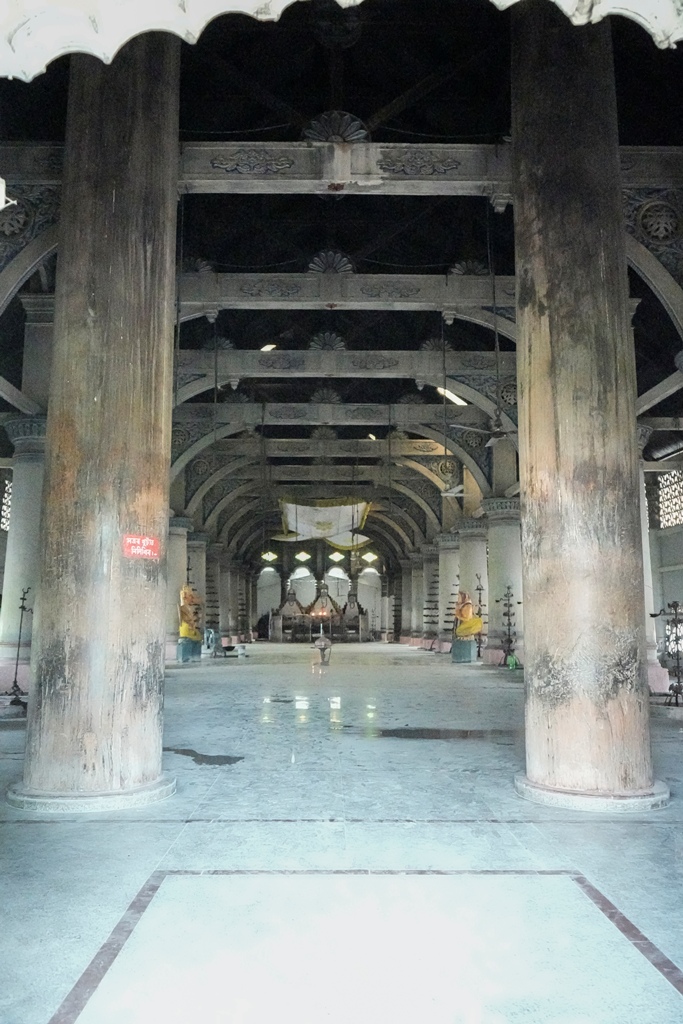
Art, Architecture and Early Glory
Biographies of the Vaishnava saints describe the first community structure at Barpeta as richly adorned. The entrance doors were embellished with delicate creeper motifs, and artisans carved the semi-divine guardians Jaya and Vijaya as dvarapalas. These sculptural figures, believed to have been crafted in the round, stood as protectors of the sacred space, while intricate relief carvings decorated the doors.
A unique feature of some sattras is the kapali — an ornamental crest often depicting one of the seven Vaikunthas in molded silver. The Kirtan-ghar (prayer hall) at Barpeta houses two exquisite kapalis: one above the northern door illustrating Goloka Vaikuntha, and another above the main Simha-dwar depicting Ananta-shayya.
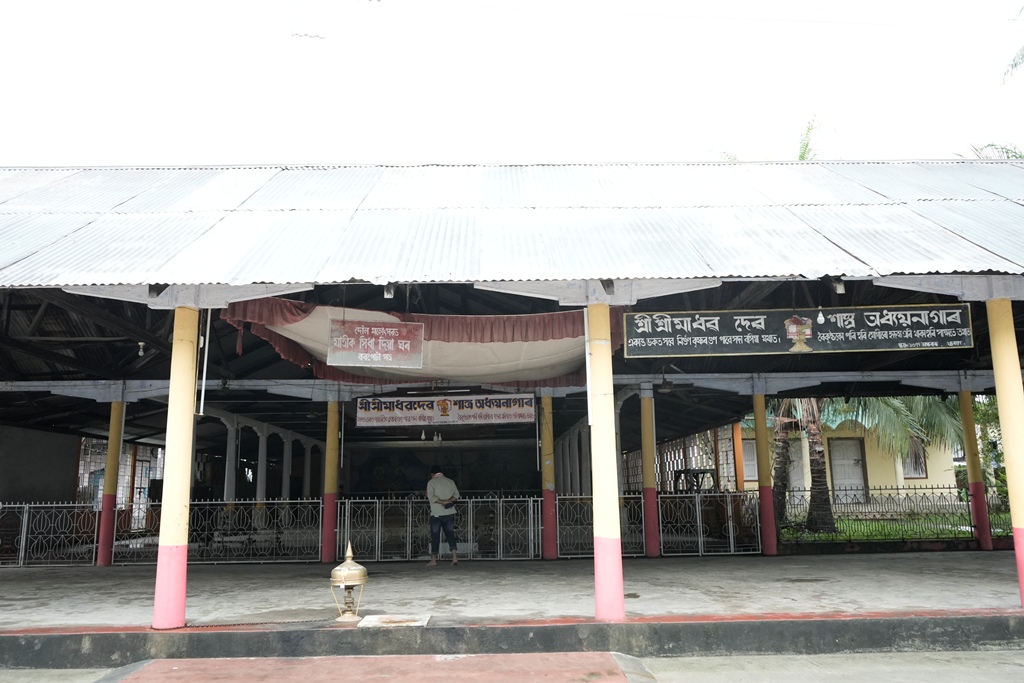
The first permanent community prayer hall in medieval Assam — known as the Rangiyal-ghar (equivalent to the Sanskrit Rangagriha) — was built here in the late 16th century at the initiative of Madhavdeva. It was not only a place for regular prayers but also a vibrant venue for dance and drama performances, marking it as one of the earliest structured auditoriums in the region. Since then, prayer halls of the Vaishnavas have also served as cultural stages.
A Democratic Spiritual Community
It was Burha Ata who systematized the Satra’s administration, laying the foundation for an egalitarian society. People from all castes and social backgrounds embraced the Vaishnavite faith here, fostering unity and a new work culture rooted in devotion and discipline. His constitution for the Satra remains in effect, a rare example of continuity across centuries.
Entering the Sacred Complex
The Satra premises begin with three Batcharas (entry gateways to the broader area): Nahati Batchara (west), Uttar Hati Batchara (north), and Dakshinhati Batchara (south). There is no eastern entry, as the Hari Jaan canal flows along that side. As a mark of reverence, vehicles are not permitted beyond these gateways.
The main complex, enclosed by a seven-foot-high wall, has three entry points — Uttar Dwaar (north), Dakshin Dwaar (south), and Dalan (west), the latter being the principal entrance.
The Heart of the Satra: Kirtan Ghar
At the center stands the magnificent Kirtan Ghar, the main prayer hall. Though originally built as a simple structure, it was reconstructed in 1952 with concrete pillars and adorned with decorative wall paintings. The hall houses three Guru Asanas dedicated to Sankardeva, Madhavdeva, and Burha Ata. In front of them are traditional brass Bar Sarais and earthen lamp stands.
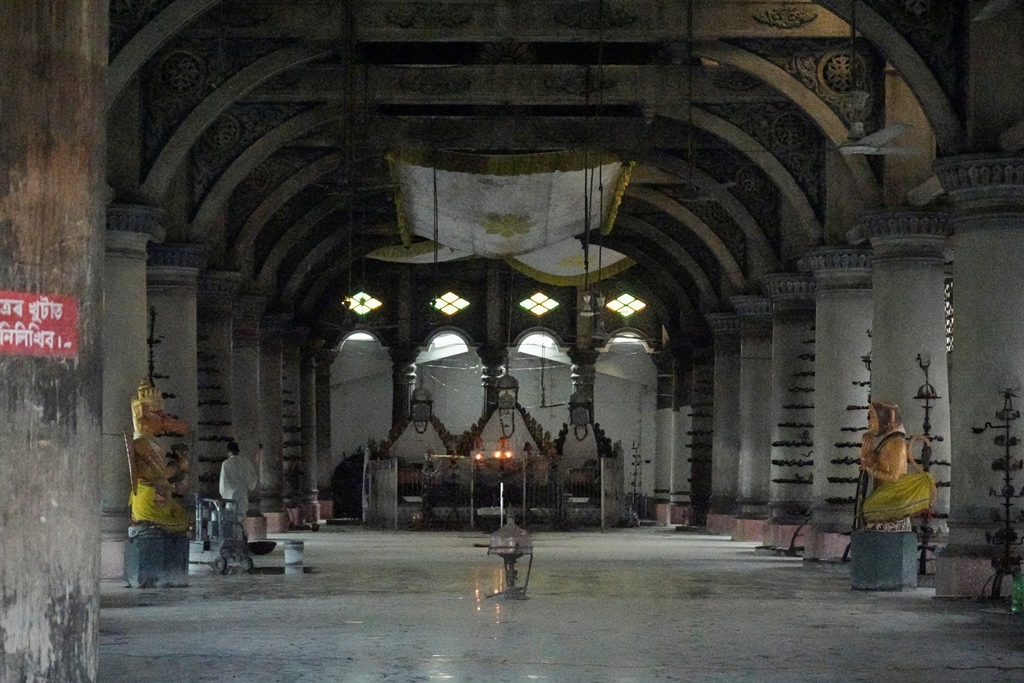
Notably, there are no idols of gods and goddesses inside the Kirtan Ghar, reflecting the Ekasarana Vaishnavite tradition. However, statues of Garuda and Hanuman are present. The outer walls depict scenes from the Bhagavata and the Puranas, while the western side illustrates the Dashavatara of Vishnu.
The Sacred Bhaj Ghar and Akshay Banti
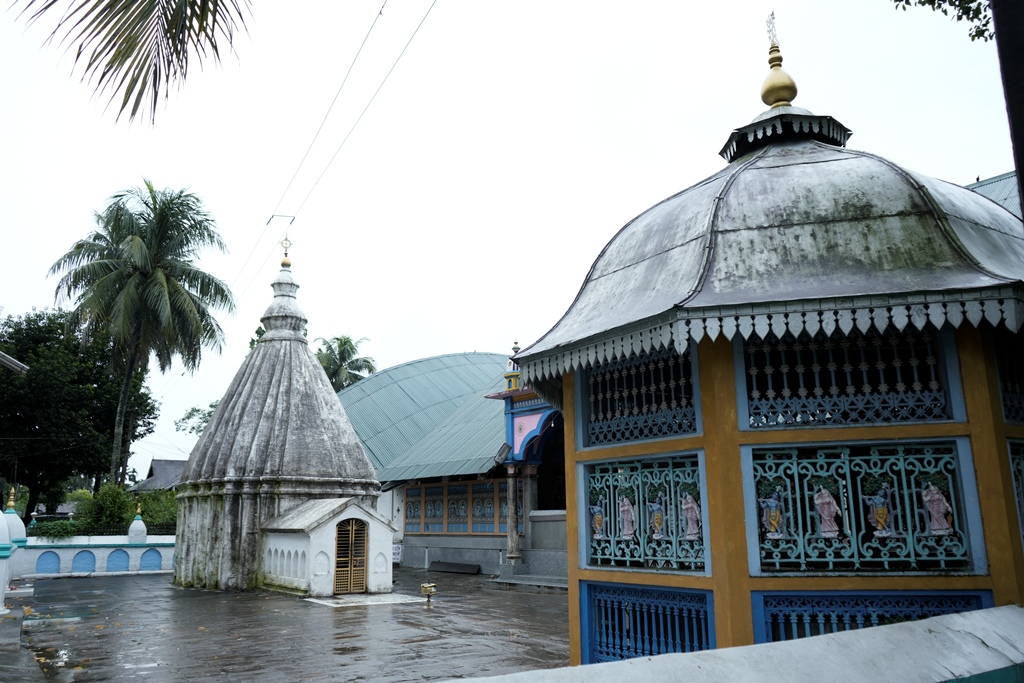
To the east of the Kirtan Ghar lies the Bhaj Ghar (Monikut), which houses the idol of Kaila Thakur (Lord Krishna) along with Rukmini. One section, known as Ghai Bharal, safeguards precious ornaments and sacred belongings of the Satra.
Here burns the Akshay Banti — an earthen lamp said to have remained alight continuously for over 500 years, symbolizing eternal devotion.
Other Notable Structures
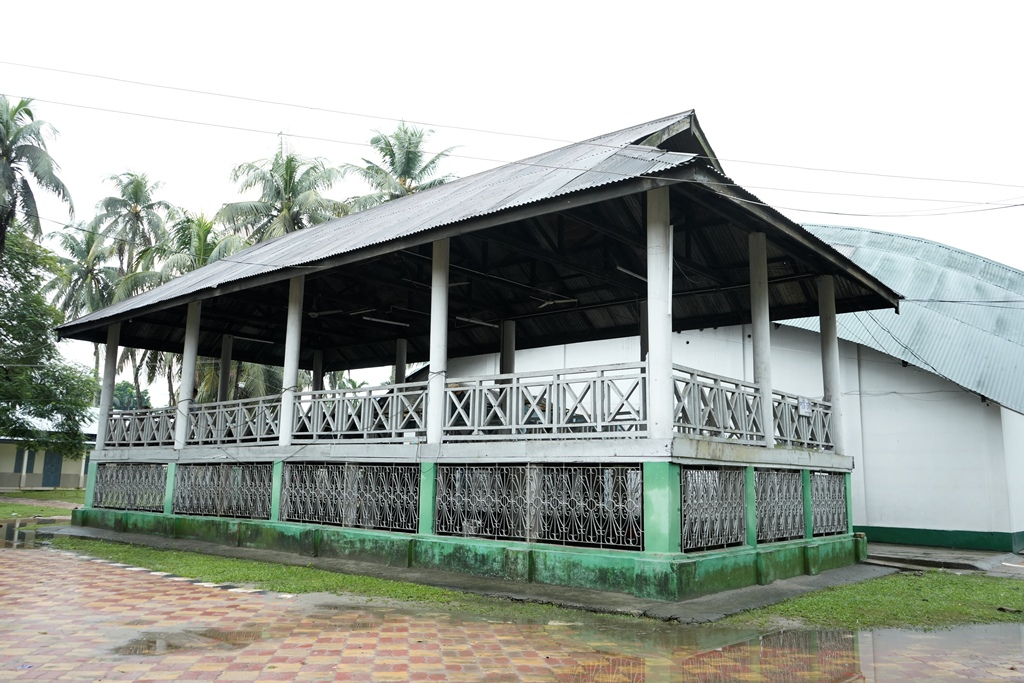
The Pat Chang, once built of wood and tin and now concrete, stands parallel to the Bhaj Ghar. Elevated above ground level, it hosts important religious and administrative meetings.
To the east flows the historic Hari Jaan canal. Its stone steps, known as Khatkhati, were once used by Madhavdeva and fellow devotees for ritual bathing. A statue of child Krishna subduing Kaliya stands in the water.
The Math marks the residential site of Madhavdeva and follows architectural elements reminiscent of the Ahom era. It is widely believed that no one speaks untruths in front of this sacred space.
Nearby are preserved sites such as:
- Sri Ram Ata’s Bhiti, whose well water is considered sacred.
- Burha Ata’s Bhiti, marking the residence of the first Satradhikar.
- Badula Padma Ata’s Bhiti, honoring another distinguished disciple.
The Bhagawat Griha serves as a scripture-reading hall, while the Atithi Griha accommodates visiting devotees. The Satria Music School promotes Sankari culture and classical Sattriya traditions. The Sabha Ghar hosts community meetings, and the unique seven-tiered Doul structure is used during Holi festivities to enshrine Kaila Thakur symbolically ascending toward heaven.
Modern additions such as the Ranga Mancha (performance stage) and the Mathura Das Burha Ata Library continue to nurture Barpeta’s rich spiritual and cultural heritage.
A Living Legacy
Barpeta Satra is not merely a monument of the past — it is a living institution where faith, art, literature, music, and community life intertwine. For over five hundred years, it has stood as a beacon of devotion and social harmony, carrying forward the timeless message of Sankardeva and Madhavdeva for generations to come.