
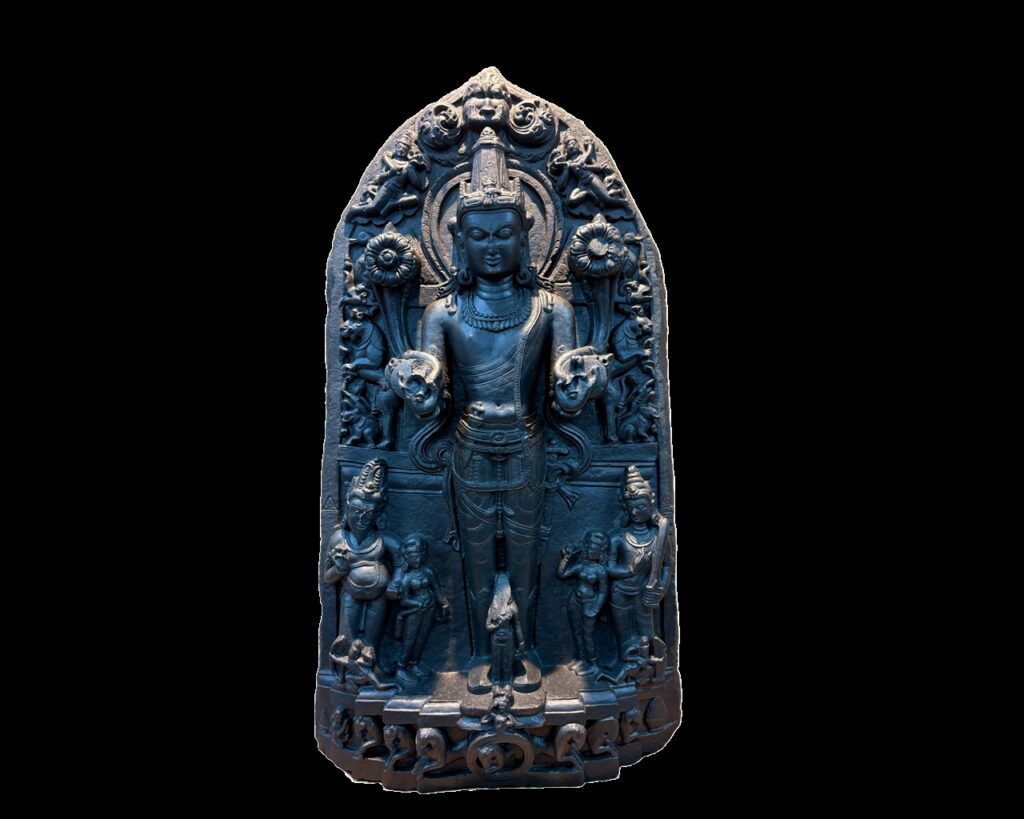
On 22 January 2020, excavation for a proposed administrative building on the Cotton University campus led to the discovery of a stone sculpture of the Hindu deity Surya. Measuring 102 × 48 × 9 cm, this artifact exemplifies the Pala-Sena artistic tradition of the Brahmaputra valley. Carved from basalt, the sculpture depicts Surya in sthanakamurti form, shown in the samapadasthānaka (erect and symmetrical) stance atop a padmapitha (fully bloomed lotus pedestal), mounted on his chariot, and set against an intricately embellished stela with numerous attendant figures.
The deity holds a lotus in each hand, both positioned above the shoulders, and is adorned with ornaments such as a hāra (necklace), upavīta (sacred thread), kundala (earrings), kirīta-mukuṭa (crown), keura (armlets), kataka (bracelets), katiśutra (girdle), avyanga (waistband), and khaḍga-bandhana (sword belt). The waist-girdle features elaborate pendants, from which a dagger and a sword are suspended on either side. The lower garment extends to the knees and is complemented by a carefully arranged cloth belt tied at the waist.

The typical kavacha (chest ornament) commonly found in northern Indian Surya images is absent; instead, a decorated drapery covers the torso. The figure is depicted wearing high boots that reach the thighs, a characteristic feature of Surya iconography in the northern regions (udīcyavarsa), with finely carved upper fringes.
Surya’s charioteer, Aruṇa, is depicted guiding a seven-horse chariot, with the central horse shown within the wheel, in accordance with the iconographic convention of Surya’s single-wheeled chariot. Two fire-altar-like motifs flank the horses, and a devotee in añjali mudrā (gesture of reverence) is seated to the right of the pedestal. The base of the sculpture displays multiple ratnas or decorative projections.